 Antica AI
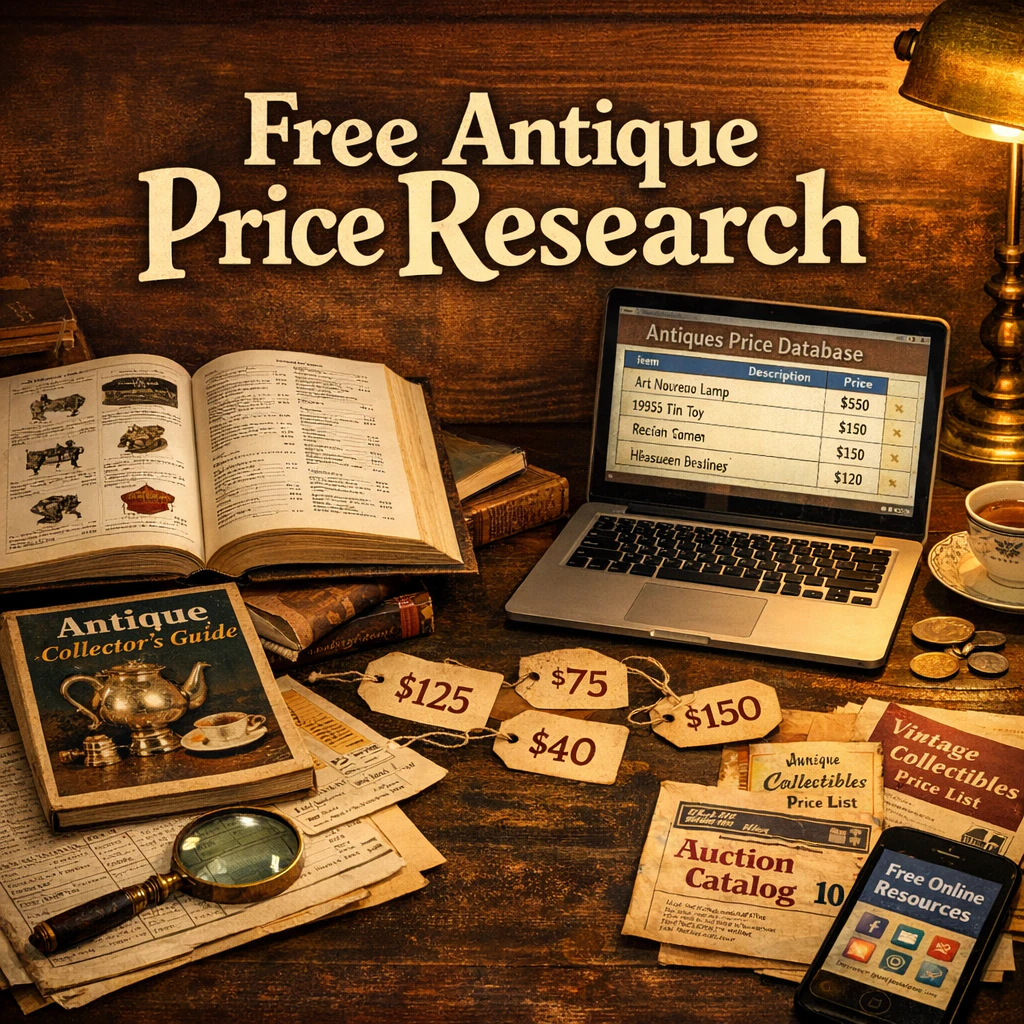
Researching antique prices doesn't always require expensive appraisal services or paid subscriptions. Many free resources provide valuable price information, helping collectors and dealers make informed decisions without significant costs. This comprehensive guide explores free methods for researching antique prices, from online auction sites to library resources, helping you find price information without breaking the bank.
Understanding Free Price Research
Free price research provides valuable starting points for understanding antique values, though it may have limitations compared to paid services. Free resources often show recent sales data, provide price ranges, and offer market insights. Understanding how to use free resources effectively helps you research prices without expensive subscriptions.
Free price research works best when you combine multiple sources: online auction sites for recent sales, library resources for historical data, and dealer listings for retail prices. No single free source provides complete accuracy—using multiple sources yields the most reliable price information.
Free resources excel at showing recent sales data and providing price ranges. However, they may have limitations: limited historical data, fewer search filters, or less detailed information than paid services. Understanding these limitations helps you use free resources effectively.
Online Auction Sites: Free Sales Data
Online auction sites provide free access to recent sales data, showing actual selling prices rather than estimates:
eBay Sold Listings
eBay's "Sold Listings" filter shows actual selling prices for items similar to yours. Search for your item, then filter by "Sold Listings" to see what buyers actually paid. eBay prices often reflect retail rather than auction house values, but they provide valuable market data, especially for common items and collectibles.
LiveAuctioneers Free Access
LiveAuctioneers provides free access to recent auction results, showing realized prices from major auction houses. While advanced search features require subscriptions, basic search and recent sales data are free. This provides valuable insights into auction house prices.
Invaluable Free Access
Invaluable offers free access to recent auction results, similar to LiveAuctioneers. Basic search and recent sales data are available without subscriptions. This provides another source of auction house price data.
Using Auction Sites Effectively
Search for items similar to yours, focusing on condition, size, and style matches. Compare multiple sales to understand price ranges. Remember that auction prices reflect buyer competition and may differ from retail prices. Use auction data as one data point among multiple sources.
According to market research, eBay sold listings are the most-used free resource for antique price research, accessed by over 70% of collectors. Auction house databases rank second, used by about 45% of collectors. Combining multiple free sources provides the most comprehensive price research.
Resources
📺 Watch Videos: Free Antique Price Research Methods
Library Resources: Free Price Guides
Public libraries often provide free access to price guides and reference materials:
Printed Price Guides
Many libraries carry printed price guides like Kovels', Miller's, and Warman's. These guides provide comprehensive price information across multiple categories. While guides may be a year or two old, they provide valuable historical price data and help understand price trends.
Reference Books
Libraries often have reference books on antiques, collectibles, and valuation. These books provide identification guides, price information, and market insights. Reference sections may include specialized guides for specific categories.
Historical Catalogs
Some libraries maintain collections of historical auction catalogs and dealer catalogs. These provide historical price data and help understand how values have changed over time. Historical catalogs are particularly valuable for understanding long-term price trends.
Using Library Resources
Visit your local library's reference section and ask librarians about antique resources. Many libraries offer interlibrary loan services, allowing access to resources from other libraries. Take notes or photographs of relevant price information for future reference.
Dealer Websites: Free Listings
Many antique dealers provide free access to their inventory listings, showing asking prices:
Dealer Inventory Lists
Dealer websites often list inventory with asking prices. While asking prices may be higher than selling prices, they provide insights into retail market values. Comparing dealer prices across multiple dealers helps understand market ranges.
Dealer Price Ranges
Some dealers provide price ranges or estimates for similar items. While these are estimates rather than actual sales, they provide valuable market insights. Contact dealers directly for price information on specific items.
Using Dealer Information
Remember that dealer asking prices are typically higher than actual selling prices. Use dealer prices as upper-end estimates, comparing them with auction prices and sold listings. Dealer prices help understand retail market values.
Online Forums and Communities
Online forums and communities provide free price information and market insights:
Collector Forums
Collector forums often include price discussions, recent sales information, and market insights. Members share price information and help identify items. Forums provide community knowledge and real-world price experiences.
Social Media Groups
Social media groups focused on antiques and collectibles often include price discussions and sales information. Members share recent purchases, sales, and market observations. Social media provides current market insights.
Using Forums Effectively
Join relevant forums and groups, participate in discussions, and ask questions. Members often share valuable price information and market insights. Remember that forum information may be anecdotal—verify through multiple sources.
📺 Watch Videos: Free Antique Price Guides and Resources
Mobile Apps: Free Price Tools
Several mobile apps provide free price information and identification tools:
Antica AI
Antica AI provides free identification and estimated values using photo recognition technology. The app combines AI identification with market data to offer quick valuations. Free features include basic identification and value estimates, making it valuable for quick research.
Other Free Apps
Several other apps provide free price information, though features may be limited. Many apps offer free basic features with premium upgrades. Try multiple apps to find the best free options for your needs.
Using Apps Effectively
Use apps for quick research and preliminary valuations. Combine app results with other free sources for comprehensive research. Remember that app estimates are starting points—verify through multiple sources.
Combining Free Resources
Effective free price research combines multiple sources:
Multi-Source Approach
Use multiple free sources together: eBay sold listings for retail prices, auction databases for auction house prices, library guides for historical data, and dealer listings for retail market values. Combining sources provides comprehensive price understanding.
Cross-Reference Prices
Cross-reference prices across sources. When multiple sources agree, confidence increases. When sources differ significantly, investigate why—differences may reflect condition, provenance, or market timing.
Understand Limitations
Recognize free resource limitations: limited historical data, fewer search filters, or less detailed information than paid services. Use free resources for preliminary research, upgrading to paid services when needed for detailed analysis.
Free Research Best Practices
Follow these best practices for effective free price research:
1. Use Multiple Sources
Don't rely on a single free source. Combine eBay sold listings, auction databases, library guides, and dealer listings. Multiple sources provide more accurate price information.
2. Focus on Recent Sales
Prioritize recent sales data—prices change over time, and recent sales reflect current market conditions. Older price guides may be outdated, especially in volatile markets.
3. Compare Similar Items
Compare items similar in condition, size, style, and provenance. Exact matches are rare—adjust for differences when comparing prices. Condition differences significantly affect values.
4. Document Your Research
Document your research: save links, take notes, and record price information. Documentation helps you remember sources and compare prices over time. Create a research file for future reference.
5. Understand Market Context
Consider market context: economic conditions, collecting trends, and geographic factors affect prices. Understanding context helps interpret price data accurately.
When Free Research Isn't Enough
Free research may not be sufficient in some situations:
High-Value Items
For items worth over $5,000, professional appraisals are recommended. Free research provides starting points, but professional appraisals provide detailed documentation and legal standing.
Insurance Purposes
Most insurers require professional appraisals for valuable items. Free research helps understand values, but insurance requires certified appraisals from qualified appraisers.
Legal Matters
Court cases, estate planning, or disputes require certified appraisals with legal standing. Free research provides background information, but legal matters require professional documentation.
Complex Items
Complex items requiring detailed examination or authentication may need professional appraisals. Free research helps understand values, but complex items require expert examination.
Conclusion: Mastering Free Price Research
Free price research provides valuable starting points for understanding antique values without expensive subscriptions or appraisal services. By combining multiple free sources—eBay sold listings, auction databases, library resources, and dealer listings—you can research prices effectively and make informed decisions.
Remember that free resources have limitations: they may show limited historical data, have fewer search filters, or provide less detailed information than paid services. Use free resources for preliminary research, upgrading to paid services or professional appraisals when needed for detailed analysis or legal purposes.
As you develop your price research skills, tools like Antica AI can provide quick valuations and market context, complementing other free resources. The combination of multiple free sources—online auction sites, library guides, dealer listings, and mobile apps—provides comprehensive price research without significant costs.
📺 Watch Videos: Finding Antique Prices for Free
Ready to Research Antique Prices for Free?
Researching antique prices can feel expensive—professional appraisals cost hundreds of dollars, and paid subscriptions add up quickly. The truth is, effective price research doesn't always require expensive services. Many free resources provide valuable price information: eBay sold listings show actual selling prices, auction databases provide auction house data, library resources offer historical guides, and dealer listings show retail market values.
An item's price depends on many factors: condition, rarity, provenance, market demand, and timing. Free resources help you understand these factors by showing recent sales, providing price ranges, and offering market insights. The most effective free research combines multiple sources—online auction sites, library guides, dealer listings, and mobile apps—providing comprehensive price understanding without significant costs.
Feeling overwhelmed by price research or need quick estimates? Antica AI is like having an antique expert in your pocket. Just snap a photo to get instant identification, estimated value ranges, and market context—turning your price research questions into confident answers, all for free.
Download Antica AI