 Antica AI
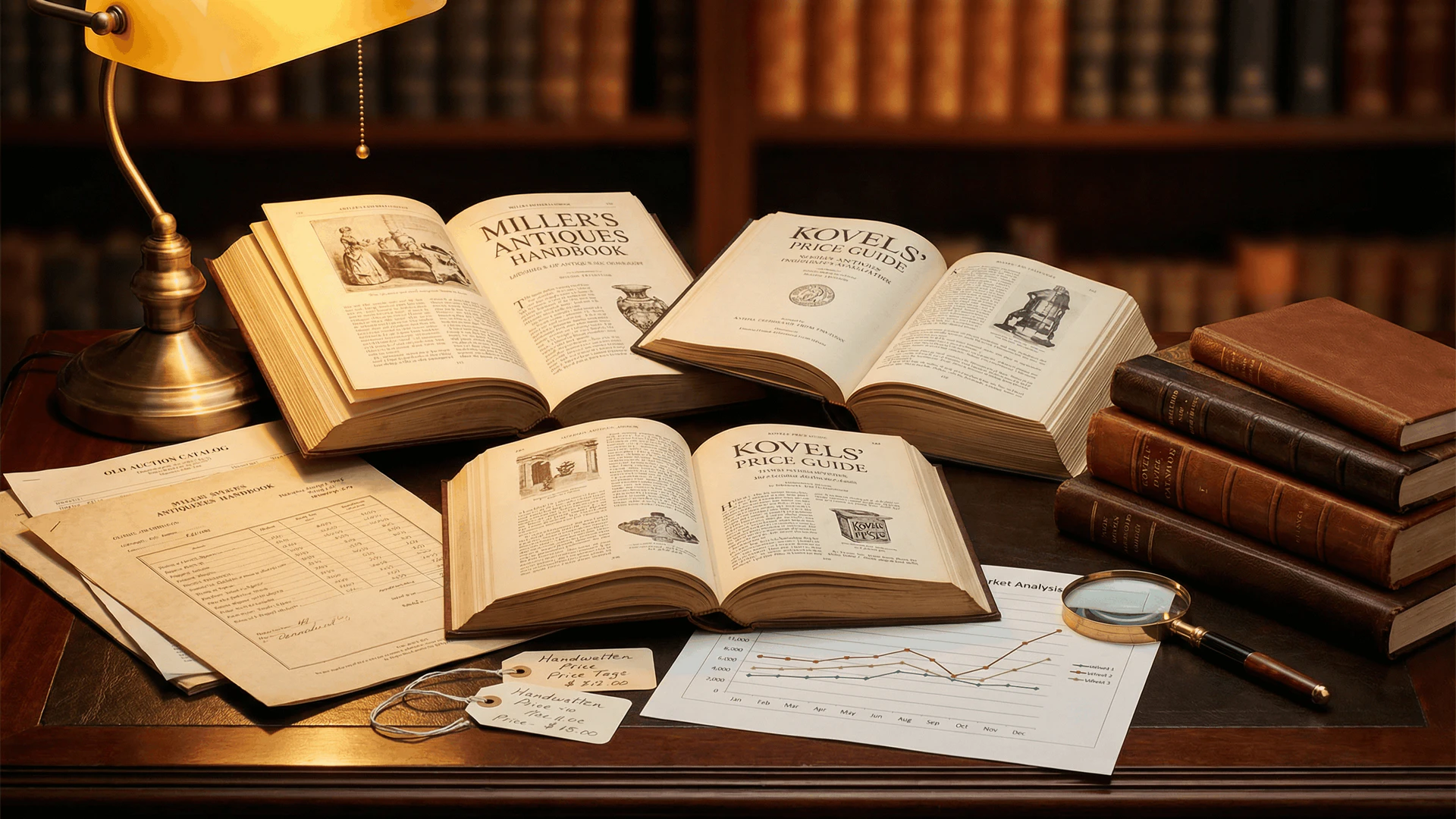
Determining the value of antiques requires access to reliable price information and market data. Whether you're buying, selling, insuring, or simply curious about your collection's worth, understanding where to find accurate price guides is essential. This comprehensive guide explores the best resources available—from traditional printed guides to modern online databases—helping you make informed decisions about antique values.
Understanding Price Guide Limitations
Before diving into specific resources, it's crucial to understand that price guides provide estimates, not absolute values. Actual market prices vary based on condition, provenance, location, timing, and buyer-seller dynamics. Price guides serve as starting points for research, helping establish value ranges rather than definitive prices.
Price guides reflect past sales and market trends, not current market conditions. Prices can fluctuate significantly based on economic factors, collector demand, and market trends. Always use multiple sources and consider recent comparable sales when determining value.
Professional appraisers combine price guide data with recent auction results, dealer prices, and market knowledge to provide accurate valuations. As a collector, learning to use price guides effectively—understanding their strengths and limitations—is essential for making informed decisions.
Traditional Printed Price Guides
Printed price guides remain valuable resources despite the rise of digital platforms. They offer comprehensive coverage, detailed descriptions, and historical price trends:
Kovels' Antiques & Collectibles Price List
Published annually since 1968, Kovels' is one of the most respected price guides in the industry. It covers over 50,000 items across multiple categories, including furniture, glass, ceramics, jewelry, and collectibles. Each entry includes descriptions, dates, and price ranges based on actual sales. The guide is organized by category with helpful indexes and identification tips.
Miller's Antiques & Collectibles Price Guide
Miller's guide focuses on European and international antiques, making it valuable for collectors of non-American items. It includes high-quality photographs, detailed descriptions, and price ranges for items sold at auction and through dealers. The guide emphasizes condition and provenance in its valuations.
Warman's Antiques & Collectibles Price Guide
Warman's provides comprehensive coverage of American antiques and collectibles, with particular strength in 20th-century items. It includes detailed condition descriptions and explains how condition affects value. The guide is user-friendly with clear organization and helpful tips for collectors.
Specialized Category Guides
Many categories have specialized guides: "Antique Trader" for general antiques, "Antique Shoppe Newspaper" for regional markets, and category-specific guides like "The Complete Price Guide to Watches" or "Antique Jewelry Price Guide." These specialized resources often provide more detailed information than general guides.
According to industry surveys, professional appraisers use an average of 3-5 different price guides when valuing items, combining printed guides with online databases and recent auction results. No single source provides complete accuracy—cross-referencing multiple sources yields the most reliable valuations.
📺 Watch Videos: How to Use Antique Price Guides
Online Auction Databases
Online auction platforms provide real-time market data, showing actual selling prices rather than estimates. These resources have revolutionized antique valuation:
LiveAuctioneers
One of the largest online auction platforms, LiveAuctioneers provides access to millions of auction results from major auction houses worldwide. Users can search by category, maker, period, and price range. The platform shows realized prices, auction house estimates, and sale dates, making it invaluable for current market research.
Invaluable
Similar to LiveAuctioneers, Invaluable aggregates auction results from hundreds of auction houses. It offers advanced search filters, price history tracking, and market trend analysis. The platform includes both current listings and historical sales data, helping users understand price trends over time.
WorthPoint
WorthPoint is a subscription-based database that tracks prices from eBay, auction houses, and dealer sales. It provides price history, market trends, and comparable sales. The platform is particularly useful for researching items sold through online marketplaces and tracking price changes over time.
eBay Sold Listings
eBay's "Sold Listings" filter shows actual selling prices for items similar to yours. While eBay prices often reflect retail rather than auction house values, they provide valuable market data, especially for common items and collectibles. Search for completed sales to see what buyers actually paid.
Online auction prices reflect what items sold for, but condition, provenance, and buyer competition affect final prices. Always examine sold listings carefully—check condition descriptions, compare similar items, and consider that online prices may differ from local market values.
Specialized Online Resources
Beyond general auction databases, specialized resources focus on specific categories or provide unique valuation tools:
Antique Trader
The Antique Trader website offers price guides, market reports, and dealer listings. It includes articles on collecting trends, price analysis, and market insights. The platform combines traditional price guide information with current market data.
GoAntiques
GoAntiques provides dealer listings, price guides, and market information. It includes a database of dealer inventory with asking prices, helping users understand retail market values. The platform covers multiple categories and includes dealer contact information.
Collectors.com
Focused on collectibles and antiques, Collectors.com offers price guides, market reports, and collecting information. It includes category-specific resources and helps collectors understand market trends in their areas of interest.
Mobile Apps and Digital Tools
Mobile apps bring price guide functionality to your smartphone, making research convenient and accessible:
Antica AI
Antica AI uses photo recognition technology to identify antiques and provide estimated values. The app combines AI identification with market data to offer quick valuations and historical context. It's particularly useful for quick research while shopping or evaluating items.
ValueMyStuff
ValueMyStuff offers professional appraisals through photo submissions. While not free, it provides expert valuations from certified appraisers. The app covers multiple categories and provides detailed reports.
Collector.com Mobile
Many price guide publishers offer mobile versions of their guides. These apps provide searchable databases, price information, and identification tools. They're convenient for on-the-go research but typically require subscriptions.
A collector found a vintage vase at a garage sale for $25. Using multiple price guides and online databases, they discovered it was a rare Art Deco piece worth $800-1,200. The collector used Kovels' guide for initial identification, LiveAuctioneers for comparable sales, and Antica AI for quick verification. This demonstrates the value of using multiple resources.
📺 Watch Videos: Using Online Databases for Antique Prices
Free vs. Paid Resources
Understanding the difference between free and paid resources helps you choose the right tools for your needs:
Free Resources
Many online auction sites offer free access to recent sales data. eBay sold listings are free to view. Some price guide publishers offer limited free access to their databases. Free resources are excellent starting points but may have limitations in search capabilities or historical data access.
Paid Subscriptions
Paid resources typically offer more comprehensive data, advanced search features, historical price tracking, and market analysis tools. WorthPoint subscriptions provide extensive historical data. Printed guides require purchase but offer comprehensive coverage. Consider your research frequency and needs when deciding whether paid resources are worth the investment.
Cost-Benefit Analysis
For occasional research, free resources may suffice. For serious collectors, dealers, or frequent buyers, paid subscriptions often pay for themselves by helping avoid overpaying or undervaluing items. Many paid services offer trial periods—try before committing.
📺 Watch Videos: Free vs Paid Antique Price Resources
Using Price Guides Effectively
Simply having access to price guides isn't enough—you need to use them correctly:
Compare Multiple Sources
Never rely on a single price guide. Compare prices across multiple sources—printed guides, online databases, and recent sales. When sources agree, you have higher confidence in the valuation. When they differ significantly, investigate why.
Consider Condition
Price guides typically show prices for items in good to excellent condition. Adjust prices downward for items with damage, repairs, or missing parts. Learn to assess condition accurately and adjust guide prices accordingly.
Account for Market Trends
Prices fluctuate based on market trends, economic conditions, and collector demand. A price guide from two years ago may not reflect current market values. Use recent sales data to understand current trends.
Understand Price Ranges
Price guides show ranges, not exact prices. Lower prices typically reflect items in poor condition or common examples. Higher prices reflect excellent condition, rarity, or exceptional provenance. Your item likely falls somewhere in the range.
Factor in Location
Prices vary by geographic location. Items may sell for more in major metropolitan areas than in rural regions. Online sales may reflect different prices than local markets. Consider where your item will be sold when using price guides.
Common Price Guide Mistakes
Avoid these common errors when using price guides:
1. Using Outdated Guides
Price guides become less accurate over time. Markets change, trends shift, and economic conditions affect values. Always use the most recent guides available and supplement with current sales data.
2. Ignoring Condition Differences
Price guides assume items in good condition. A damaged item worth $500 in perfect condition might be worth $150 with significant damage. Always adjust guide prices based on actual condition.
3. Assuming Guide Prices Are Exact
Price guides provide estimates, not guarantees. Actual selling prices depend on many factors. Use guides to establish value ranges, not exact prices.
4. Not Considering Provenance
Items with documented history or famous previous owners command premium prices. Price guides may not account for exceptional provenance. Adjust upward for items with significant history.
5. Overlooking Market Timing
Prices fluctuate based on market conditions, trends, and economic factors. A guide from a strong market may overvalue items in a weak market, and vice versa. Consider current market conditions.
Building Your Price Research Toolkit
Effective price research requires multiple tools. Build a toolkit that works for your needs:
Essential Resources
Start with one comprehensive printed guide (Kovels' or Miller's), access to an online auction database (LiveAuctioneers or Invaluable), and a mobile app for quick research (Antica AI). These three resources cover most research needs.
Specialized Resources
Add category-specific guides for your collecting interests. If you collect jewelry, add a jewelry price guide. If you collect furniture, add a furniture-specific resource. Specialized guides provide more detailed information than general guides.
Market Monitoring
Subscribe to auction house newsletters and follow dealers in your category. Stay informed about market trends, upcoming sales, and price changes. Market knowledge complements price guide data.
When Price Guides Aren't Enough
Some situations require professional appraisal beyond price guides:
- High-value items: For items worth over $5,000, professional appraisal is recommended.
- Insurance purposes: Most insurers require professional appraisals for valuable items.
- Estate planning: Professional appraisals help with estate planning and tax considerations.
- Unique items: One-of-a-kind or extremely rare items may not appear in price guides.
- Legal matters: Court cases, divorces, or disputes require certified appraisals.
Conclusion: Mastering Price Research
Effective price research combines multiple resources, careful analysis, and understanding of market factors. Price guides provide valuable starting points, but they're tools to be used thoughtfully, not absolute authorities. The best approach combines guide data with recent sales, market knowledge, and professional expertise when needed.
Remember that price guides reflect past sales and market conditions. Current market values may differ significantly. Use guides to establish value ranges, understand market trends, and make informed decisions. When in doubt, especially for high-value items, consult professional appraisers who combine guide data with current market knowledge.
As you develop your price research skills, tools like Antica AI can provide quick valuations and market context, complementing traditional price guides and online databases. The combination of multiple resources—printed guides, online databases, mobile apps, and professional expertise—provides the most accurate valuations.
📺 Watch Videos: Best Antique Price Guide Resources
Ready to Research Antique Prices?
Determining antique values can be challenging—which price guides are reliable? How do you know if a price is accurate? The truth is, effective price research requires using multiple resources: printed guides for historical trends, online databases for current sales, and market knowledge for context.
An item's value depends on many factors: condition, rarity, provenance, market demand, and timing. Price guides provide estimates, but actual market prices vary based on these factors. The most accurate valuations come from combining guide data with recent comparable sales and market knowledge.
Feeling overwhelmed by price research or need quick valuations? Antica AI is like having an antique expert in your pocket. Just snap a photo to get instant identification, estimated value ranges, and market context—turning your price research questions into confident answers.
Download Antica AI