 Antica AI
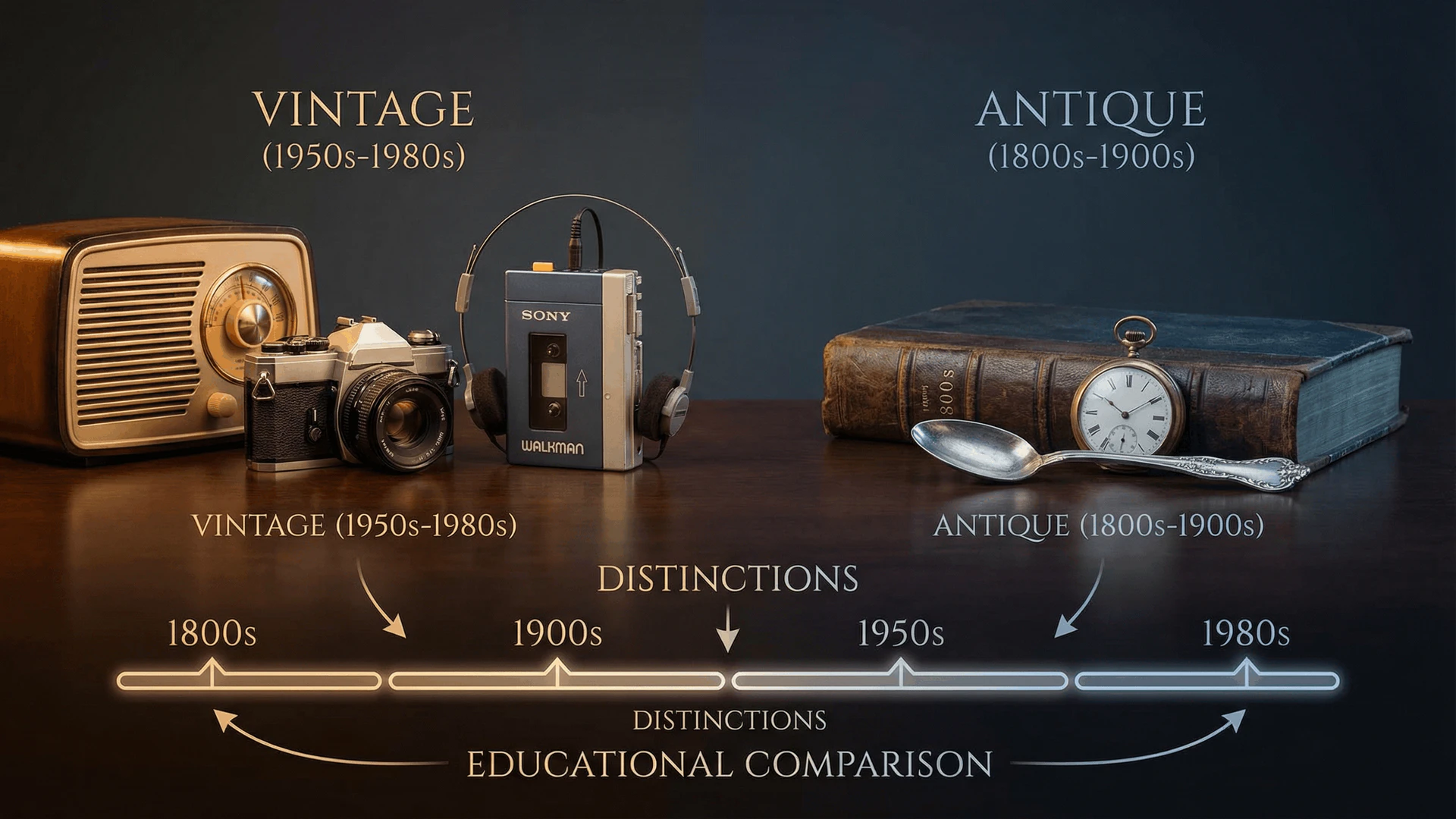
The terms "vintage" and "antique" are often used interchangeably, but they have distinct meanings that affect value, collecting, and legal definitions. Understanding these differences is crucial for collectors, dealers, and anyone interested in older items. This comprehensive guide explains the definitions, distinctions, and implications of vintage versus antique classification, helping you navigate the collecting world with confidence.
Defining Antique: The 100-Year Rule
An antique is an item that is at least 100 years old. This definition is widely accepted in the United States and many other countries, though some regions use slightly different age thresholds. The 100-year rule provides a clear, objective standard for classification.
In the United States, U.S. Customs defines antiques as items made before 1830 (effectively 100+ years old at any given time). This definition affects import duties—antiques often enter the country duty-free, while newer items may be subject to tariffs. The 100-year threshold is also used by most auction houses, dealers, and appraisers.
The 100-year rule means that as time passes, items become antiques. For example, items from 1924 became antiques in 2024. This dynamic definition ensures that the antique category evolves with time, though the threshold remains constant.
Defining Vintage: The 20-100 Year Range
Vintage items are typically 20 to 100 years old, representing a period between "retro" (recent past) and "antique" (100+ years). However, vintage definitions vary more than antique definitions:
Common Vintage Definitions
Most collectors and dealers consider items 20-100 years old as vintage. Some use narrower ranges like 30-100 years or 40-100 years. The term "vintage" often implies quality, style, or historical significance beyond mere age.
Vintage as Quality Indicator
In some contexts, "vintage" refers to items from a specific era known for quality or style, regardless of exact age. For example, "vintage wine" refers to wine from a particular year, and "vintage clothing" often means items from specific decades (1950s, 1960s) known for distinctive styles.
Legal and Customs Definitions
Unlike antiques, vintage items don't have universal legal definitions. Customs agencies may treat vintage items differently than antiques, and tax laws vary. This lack of standardization makes vintage classification more subjective than antique classification.
The term "vintage" originally referred to wine from a particular harvest year. It was adopted by collectors to describe items from specific periods, emphasizing quality and period characteristics rather than just age. This explains why "vintage" often implies desirability and style, not just chronological age.
Categories
📺 Watch Videos: Vintage vs Antique Explained
Key Differences: Antique vs Vintage
Understanding the differences between antiques and vintage items helps with collecting, valuation, and legal matters:
Age Threshold
The primary difference is age: antiques are 100+ years old, while vintage items are typically 20-100 years old. This age difference affects value, rarity, and legal classification.
Value and Rarity
Antiques are generally rarer and often more valuable due to age, scarcity, and historical significance. Vintage items can be valuable but are more common and accessible. However, exceptional vintage items (like mid-century modern furniture) can command prices comparable to antiques.
Legal and Tax Implications
Antiques often receive favorable tax treatment—they may be imported duty-free and qualify for lower capital gains taxes. Vintage items typically don't receive the same legal benefits. Estate planning and insurance also treat antiques and vintage items differently.
Collecting Focus
Antique collecting emphasizes historical significance, craftsmanship, and rarity. Vintage collecting often focuses on style, design, and cultural significance. Both approaches are valid but attract different types of collectors.
Why Age Matters: Practical Implications
Age classification affects multiple aspects of collecting and dealing:
Insurance and Appraisal
Insurance companies often require different documentation for antiques versus vintage items. Antiques may need certified appraisals, while vintage items might require less formal documentation. Appraisal methods and value assessments differ based on classification.
Import and Export
Customs regulations treat antiques and vintage items differently. Antiques often enter countries duty-free, while vintage items may be subject to tariffs. Export restrictions also differ—some countries restrict export of antiques but allow vintage items.
Market Perception
Market perception differs: "antique" implies historical significance and often higher value, while "vintage" suggests style and quality from a specific era. This perception affects pricing, buyer interest, and collecting strategies.
📺 Watch Videos: Collecting Vintage vs Antique
Common Misconceptions
Several misconceptions confuse the vintage vs antique distinction:
Misconception 1: "Vintage" Means Old
While vintage items are old, "vintage" doesn't automatically mean valuable or collectible. Many vintage items are common and inexpensive. The term refers to age range, not value or desirability.
Misconception 2: All Antiques Are Valuable
Age alone doesn't guarantee value. Many antiques are common, damaged, or out of style, making them less valuable. Condition, rarity, and demand determine value more than age alone.
Misconception 3: Vintage Is Just "Young Antique"
Vintage and antique represent different collecting philosophies. Antiques emphasize historical significance and craftsmanship, while vintage focuses on style and period characteristics. They're not just different age categories—they represent different approaches to collecting.
Misconception 4: Legal Definitions Are Universal
While "antique" has a relatively standard definition (100+ years), "vintage" definitions vary. Different countries, customs agencies, and organizations use different age thresholds and criteria.
Determining Age: Practical Methods
Determining whether an item is antique or vintage requires identifying its age:
Maker's Marks and Labels
Maker's marks, labels, and stamps often include dates or can be researched to determine production periods. Company histories, trademark registrations, and production records help date items accurately.
Style and Design Analysis
Style characteristics reflect historical periods. Art Deco design indicates 1920s-1930s, mid-century modern suggests 1940s-1960s, and Victorian style indicates 1800s. Style analysis helps narrow age ranges.
Construction Methods
Construction techniques reveal age. Hand-crafted joinery suggests pre-industrial production (often antique), while machine-made components indicate industrial-era production (often vintage). Tool marks and construction methods provide dating clues.
Materials and Technology
Materials and technology used in production reflect periods. Early plastics (Bakelite) indicate 1900s-1940s, while modern plastics suggest later production. Metal types, hardware styles, and manufacturing techniques help date items.
Collecting Strategies: Antique vs Vintage
Different collecting strategies suit antiques versus vintage items:
Antique Collecting
Antique collecting emphasizes historical significance, rarity, and investment potential. Collectors often focus on specific periods, makers, or styles. Research, authentication, and condition assessment are crucial. Antique collecting requires patience and knowledge.
Vintage Collecting
Vintage collecting emphasizes style, design, and personal taste. Collectors often focus on specific decades or design movements. Condition matters but perfect condition is less critical than with antiques. Vintage collecting is more accessible and often more affordable.
Hybrid Approaches
Many collectors combine both approaches, collecting antiques for historical significance and vintage items for style and design. This hybrid approach provides diversity and balances investment potential with personal enjoyment.
Market Trends: Antique vs Vintage
Market trends affect antiques and vintage items differently:
Antique Market Trends
Antique markets are generally stable but can fluctuate based on economic conditions, collector interest, and generational preferences. Traditional antiques (furniture, silver, ceramics) may see declining interest as younger collectors prefer different styles.
Vintage Market Trends
Vintage markets are more dynamic, influenced by fashion trends, design movements, and cultural nostalgia. Mid-century modern furniture, vintage clothing, and retro electronics have seen significant price increases as younger collectors discover these periods.
Generational Shifts
Generational preferences affect both markets. Baby boomers favor traditional antiques, while millennials and Gen Z prefer vintage items from the 1950s-1990s. These generational shifts influence market values and collecting trends.
Conclusion: Understanding the Distinction
The distinction between vintage and antique is more than semantic—it affects value, legal classification, collecting strategies, and market perception. Understanding these differences helps collectors make informed decisions and navigate the collecting world effectively.
Remember that age is just one factor. Condition, rarity, style, and demand determine value more than age alone. Whether you collect antiques, vintage items, or both, focus on items you appreciate and understand. Knowledge, research, and personal taste guide successful collecting more than strict age classifications.
As you develop your collecting interests, use tools like Antica AI to help identify items and determine their age. Understanding whether items are antique or vintage helps you make informed decisions about purchases, insurance, and collection management.
📺 Watch Videos: Determining Vintage vs Antique Age
Ready to Identify Vintage vs Antique?
Determining whether an item is vintage or antique can feel confusing—what's the difference? How do you know the age? The truth is, understanding vintage vs antique requires knowing age thresholds, recognizing style characteristics, and understanding how age affects value and classification.
An item's classification depends on its age: antiques are 100+ years old, while vintage items are typically 20-100 years old. However, age is just one factor—condition, rarity, style, and demand also determine value and desirability. The most successful collectors understand both age classification and value factors.
Feeling overwhelmed by age determination or need quick identification? Antica AI is like having an antique expert in your pocket. Just snap a photo to get instant identification, age estimation, and classification—turning your vintage vs antique questions into confident answers.
Download Antica AI