 Antica AI
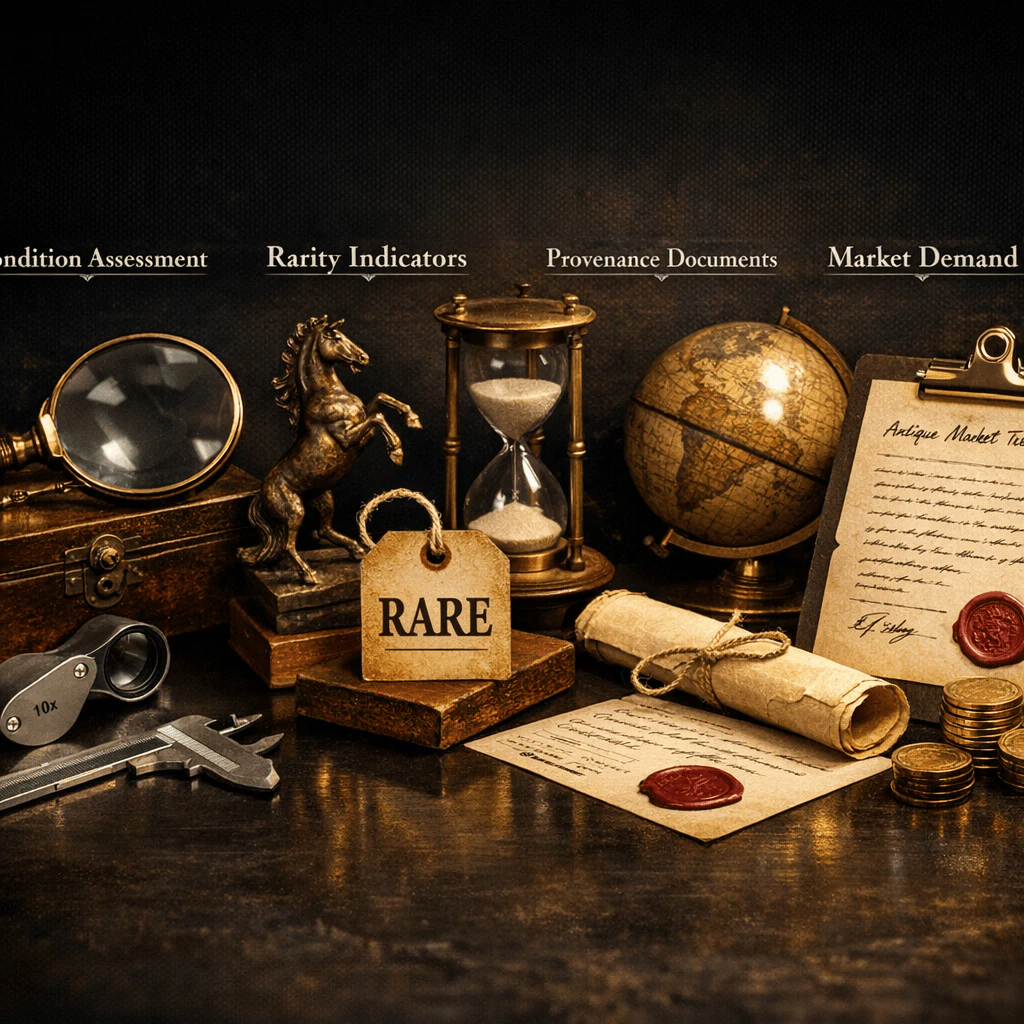
Understanding what determines antique value is crucial for collectors, dealers, and anyone interested in antiques. While age is often assumed to be the primary factor, value actually depends on multiple interconnected factors: condition, rarity, provenance, market demand, and authenticity. This comprehensive guide explores these value determinants, explaining how they interact and which factors matter most in different situations.
The Value Equation: Multiple Factors
Antique value isn't determined by a single factor but by the interaction of multiple elements. A 200-year-old item in poor condition may be worth less than a 50-year-old item in perfect condition. Understanding how these factors interact helps explain why similar items command vastly different prices.
Value = (Condition × Rarity × Provenance × Demand) / Availability. This simplified equation shows that value isn't linear—exceptional rarity or provenance can multiply value, while poor condition divides it. Market demand acts as a multiplier, and availability (how many similar items exist) acts as a divisor.
Professional appraisers evaluate all factors together, weighing their relative importance based on the specific item and market conditions. No single factor determines value in isolation—it's the combination that matters.
Condition: The Foundation of Value
Condition is often the most important factor affecting antique value. Even rare, historically significant items lose substantial value if damaged or poorly maintained:
Condition Grades
Professional condition grading uses standardized terms: Mint (perfect), Excellent (minor wear), Very Good (some wear), Good (noticeable wear), Fair (significant wear), and Poor (damaged). Each grade affects value differently—mint condition may command 100% of potential value, while poor condition may be worth only 20-30%.
Restoration Impact
Restoration affects value based on quality and extent. Professional restoration that preserves original character may maintain or enhance value. Poor restoration or over-restoration reduces value significantly. Original condition is generally preferred, but professional restoration is better than leaving damage unrepaired.
Condition-Specific Value Impact
Condition impact varies by category. Furniture shows condition issues more visibly than small items. Ceramics and glass are particularly condition-sensitive—chips, cracks, or repairs dramatically reduce value. Textiles and paper are extremely condition-sensitive—damage often makes items nearly valueless.
According to auction house data, condition differences can create 10x value variations. A rare item in mint condition may sell for $10,000, while the same item in poor condition may sell for $1,000. This extreme variation emphasizes why condition assessment is crucial for accurate valuation.
📺 Watch Videos: How Condition Affects Antique Value
Rarity: The Scarcity Factor
Rarity significantly impacts value, but rarity alone doesn't guarantee high value. Rarity must combine with desirability to create high prices:
Types of Rarity
Rarity comes in multiple forms: absolute rarity (few examples exist), relative rarity (few examples available for sale), and perceived rarity (collectors believe items are rare). Perceived rarity can drive prices even when absolute rarity is lower.
Rarity vs. Desirability
Rare but undesirable items have limited value. Rare and desirable items command premium prices. Understanding the difference between rarity and desirability helps explain market prices. A common item in high demand may outsell a rare item with low demand.
Documenting Rarity
Proving rarity requires research: production records, survival rates, auction histories, and collector knowledge. Items with documented rarity command higher prices than items with assumed rarity. Documentation adds credibility and value.
Provenance: The History Factor
Provenance—the documented history of ownership—can dramatically increase value, especially for high-end items:
Provenance Types
Provenance includes ownership history, exhibition history, publication history, and association with notable figures. Each type adds value differently. Ownership by famous collectors or museums adds significant value. Exhibition history adds credibility. Publication in books or catalogs adds documentation.
Provenance Documentation
Documented provenance is more valuable than oral history. Receipts, letters, photographs, and records provide proof. Without documentation, provenance claims are difficult to verify and may not add value. Professional appraisers verify provenance before including it in valuations.
Provenance Value Impact
Provenance impact varies by item value and provenance significance. For high-value items, exceptional provenance can double or triple value. For lower-value items, provenance may add 10-20%. The more significant the provenance, the greater the value impact.
Market Demand: The Buyer Factor
Market demand reflects what buyers are willing to pay, which may differ from theoretical value based on other factors:
Demand Drivers
Demand is driven by fashion trends, generational preferences, economic conditions, and collecting trends. Items popular with current collectors command higher prices. Trends change over time—what's desirable today may be less desirable tomorrow, and vice versa.
Market Timing
Market timing significantly affects prices. Selling during high demand periods maximizes value. Selling during low demand periods minimizes value. Understanding market cycles helps time sales for optimal prices.
Geographic Demand
Demand varies by geography. Items popular in one region may be less popular elsewhere. International markets may value items differently than local markets. Understanding geographic demand helps identify optimal selling locations.
Factors
📺 Watch Videos: Antique Value Factors Explained
Authenticity: The Trust Factor
Authenticity is fundamental—reproductions or fakes have minimal value regardless of other factors:
Authentication Methods
Authentication combines visual examination, scientific testing, provenance research, and expert opinion. No single method guarantees authenticity—experts use multiple methods together. Professional authentication adds credibility and value.
Authentication Value Impact
Authenticated items command higher prices than unauthenticated items. Professional authentication provides buyers confidence, enabling higher prices. Unauthenticated items sell at discounts due to uncertainty.
Reproduction Impact
Reproductions have minimal antique value, though some reproductions have collectible value in their own right. Distinguishing reproductions from originals requires expertise. When in doubt, professional authentication is recommended.
Category-Specific Factors
Different categories emphasize different value factors:
Furniture
Furniture value emphasizes condition, maker attribution, and style. Construction quality matters significantly. Provenance adds value, especially for documented makers. Market demand varies by style period.
Ceramics and Glass
Ceramics and glass are extremely condition-sensitive. Minor damage dramatically reduces value. Maker marks and patterns matter significantly. Rarity and condition dominate value determination.
Jewelry
Jewelry value emphasizes materials (precious metals, gemstones), craftsmanship, designer attribution, and condition. Provenance adds value for designer pieces. Market demand varies by style and designer.
Art and Paintings
Art value emphasizes artist attribution, condition, provenance, and exhibition history. Authenticity is crucial—fakes have no value. Market demand varies significantly by artist and style.
Conclusion: Understanding Value
Antique value depends on multiple interacting factors: condition provides the foundation, rarity creates scarcity, market demand reflects buyer interest, and provenance adds historical significance. Understanding how these factors interact helps explain market prices and make informed collecting decisions.
Remember that value is dynamic—it changes with market conditions, trends, and buyer preferences. What's valuable today may be less valuable tomorrow, and vice versa. Focus on items you appreciate, understand the value factors, and make informed decisions based on knowledge rather than assumptions.
As you develop your collecting interests, use tools like Antica AI to help identify items and understand their characteristics. Combine identification with research into condition, rarity, provenance, and market demand to develop comprehensive value understanding.
📺 Watch Videos: What Determines Antique Value
Ready to Understand Antique Values?
Understanding antique values can feel overwhelming—what factors matter most? How do condition, rarity, and provenance interact? The truth is, antique value depends on multiple factors: condition provides the foundation, rarity creates scarcity, market demand reflects buyer interest, and provenance adds historical significance.
An item's value isn't determined by age alone—a 200-year-old item in poor condition may be worth less than a 50-year-old item in perfect condition. The most valuable items combine excellent condition, rarity, strong market demand, and significant provenance. Understanding these factors helps explain market prices and make informed decisions.
Feeling overwhelmed by value factors or need quick estimates? Antica AI is like having an antique expert in your pocket. Just snap a photo to get instant identification, value estimates, and market context—turning your value questions into confident answers.
Download Antica AI