 Antica AI
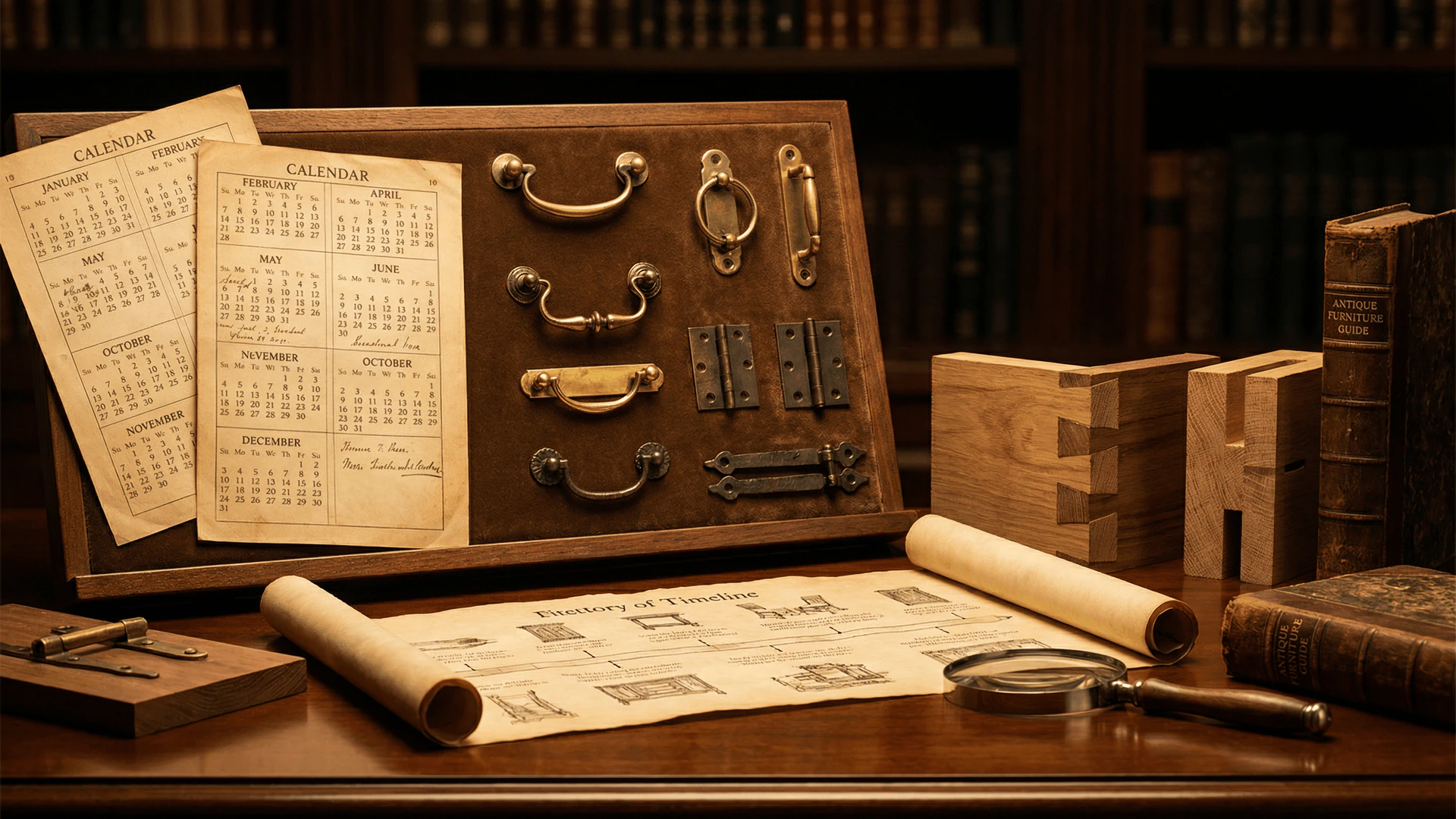
Dating antique furniture accurately requires understanding multiple dating techniques that professional appraisers use. Unlike modern furniture with labels and serial numbers, antique furniture reveals its age through construction methods, hardware styles, joinery techniques, and stylistic characteristics. This comprehensive guide teaches you the professional techniques for dating antique furniture, helping you determine when pieces were made and understand their historical context.
Understanding Furniture Dating Basics
Furniture dating combines multiple techniques to narrow down when a piece was made. No single method provides absolute certainty—professional appraisers use multiple dating clues together to establish date ranges. Understanding these techniques helps you date furniture accurately and understand its historical significance.
Furniture dating relies on multiple independent clues: hardware styles, construction methods, wood types, joinery techniques, and stylistic characteristics. When multiple clues point to the same period, confidence increases. Conflicting clues may indicate repairs, modifications, or reproductions.
Professional furniture dating examines hardware first—it's often the most reliable indicator because hardware styles changed with technology and fashion. Construction methods provide secondary clues, while style characteristics help narrow date ranges. Combining all techniques provides the most accurate dating.
Hardware: The Most Reliable Dating Clue
Hardware—hinges, locks, drawer pulls, and escutcheons—provides excellent dating clues because hardware styles evolved with technology and fashion:
Hinge Evolution
Hinges evolved significantly over time. Early hinges (pre-1800) were hand-forged with irregular shapes—H-hinges and butterfly hinges were common. Machine-made hinges (post-1850) are uniform and perfectly shaped. Hinge styles changed with periods—Queen Anne furniture used different hinges than Victorian pieces. Examining hinges provides reliable dating clues.
Drawer Pull Styles
Drawer pull styles reflect periods accurately. Early pulls (pre-1800) were hand-forged or cast brass with simple designs. Victorian pulls (1830-1900) are ornate and machine-made. Arts and Crafts movement (1880-1920) favored simple, handcrafted pulls. Art Deco (1920s-1930s) used geometric, streamlined designs. Pull styles help narrow dating significantly.
Locks and Escutcheons
Lock mechanisms and escutcheon (keyhole cover) styles changed with periods. Early locks (pre-1800) are simple and hand-forged. Victorian locks (1830-1900) are complex and ornate. Modern locks (post-1900) are standardized. Escutcheon shapes and decorations reflect period styles—examining locks provides dating clues.
Screws and Fasteners
Screw types reveal age. Early screws (pre-1850) have irregular threads and hand-filed slots. Machine-made screws (post-1850) are uniform. Screw head styles changed over time—flat heads, round heads, and Phillips heads indicate different periods. Nails evolved similarly—hand-forged nails (pre-1800), cut nails (1800-1890), and wire nails (post-1890) indicate periods.
Hardware dating is so reliable that professional appraisers often start with hardware examination. A single piece of hardware can narrow dating to a 20-30 year period. When hardware matches construction methods and style characteristics, dating confidence increases significantly.
📺 Watch Videos: Dating Furniture Through Hardware
Construction Methods: Dating Through Joinery
Construction methods reveal age because different periods used different joinery techniques, tools, and construction approaches:
Dovetail Joints
Dovetail joints evolved significantly. Hand-cut dovetails (pre-1860) show irregularities—pins and tails vary slightly in size, spacing is uneven, and saw marks are visible. Machine-made dovetails (post-1860) are perfectly uniform. Early dovetails (pre-1800) are often larger and more widely spaced than later examples. Examining dovetails provides dating clues.
Mortise and Tenon Joints
Mortise and tenon joints show tool marks that reveal age. Hand-chiseled mortises (pre-1850) show rounded corners and tool marks. Machine-cut mortises (post-1850) are perfectly square and uniform. The presence of hand-cut mortise and tenon joints indicates pre-industrial construction, helping date furniture to specific periods.
Nail Types
Nail types reveal age accurately. Hand-forged nails (pre-1800) are irregular and show hammer marks. Cut nails (1800-1890) have distinctive rectangular shanks. Wire nails (post-1890) are round and uniform. Screws evolved similarly—early screws have irregular threads and hand-filed slots, while modern screws are perfectly uniform.
Wood Surfaces
Wood surface characteristics reveal age. Hand-planed surfaces (pre-1850) show slight irregularities and tool marks. Machine-planed surfaces (post-1850) are perfectly smooth. Early furniture may show saw marks from pit saws or water-powered sawmills. These surface characteristics help date furniture to specific periods.
Wood Types: Period-Appropriate Materials
Wood types used in furniture reflect availability, cost, and fashion during specific periods. Understanding period-appropriate woods helps date furniture:
Primary Woods by Period
Colonial American furniture (1600-1780) used local hardwoods: oak, maple, cherry, and walnut. Federal period (1780-1820) favored mahogany and satinwood. Victorian era (1830-1900) used rosewood, walnut, and oak. Arts and Crafts movement (1880-1920) emphasized oak. Mid-century modern (1940-1970) used teak and walnut. Using inappropriate woods for a claimed period indicates reproduction or later modification.
Secondary Woods
Secondary woods (used for backs, drawers, frames) also reveal period. Early furniture used pine or poplar for secondary woods. Later periods used plywood or particle board (post-1850). Examining secondary woods helps authenticate pieces—authentic antiques use period-appropriate secondary woods.
Wood Patina
Natural patina develops over decades and reveals age. Authentic patina shows consistent wear patterns, oxidation, and age-related color changes. Artificial patina often looks inconsistent or applied. Learning to recognize natural patina takes experience but provides dating clues.
📺 Watch Videos: Dating Furniture Through Construction
Style Characteristics: Dating Through Design
Furniture styles reflect historical periods, cultural influences, and fashion trends. Recognizing style characteristics helps date furniture:
Colonial Period (1600-1780)
Colonial furniture is functional and simple, reflecting Puritan values. Pieces are heavy, rectangular, and use local hardwoods. Decoration is minimal—carving is geometric or floral. Construction is sturdy but not refined. Hardware is simple and hand-forged. These characteristics help identify Colonial period furniture.
Federal Period (1780-1820)
Federal furniture shows neoclassical influence with elegant proportions, inlay work, and refined details. Mahogany is common. Legs are tapered and delicate. Decoration includes eagle motifs, swags, and classical elements. Construction is refined and precise. These characteristics help identify Federal period furniture.
Victorian Period (1830-1900)
Victorian furniture is ornate and heavy, reflecting wealth and status. Pieces feature elaborate carving, dark finishes, and machine-made details. Rosewood and walnut are common. Styles include Rococo Revival, Renaissance Revival, and Eastlake. Construction combines hand and machine work. These characteristics help identify Victorian period furniture.
Arts and Crafts Movement (1880-1920)
Arts and Crafts furniture emphasizes handcraftsmanship, simple lines, and natural materials. Oak is primary wood. Decoration is minimal—construction quality is the decoration. Hardware is simple and handcrafted. Pieces show joinery and construction details. These characteristics help identify Arts and Crafts period furniture.
Mid-Century Modern (1940-1970)
Mid-century modern emphasizes clean lines, functionality, and new materials. Teak and walnut are common. Legs are often tapered or hairpin. Construction uses modern joinery and materials. Pieces are lighter and more functional than earlier periods. These characteristics help identify mid-century modern furniture.
Systematic Dating Process
Professional furniture dating follows a systematic process:
Step 1: Hardware Examination
Start with hardware—examine hinges, locks, pulls, and escutcheons. Identify hardware styles and compare to period characteristics. Hardware provides the most reliable dating clues.
Step 2: Construction Analysis
Examine construction methods—check joinery techniques, tool marks, and construction approaches. Identify hand-crafted versus machine-made characteristics. Construction methods provide secondary dating clues.
Step 3: Wood Identification
Identify primary and secondary woods. Check if woods are period-appropriate. Examine patina and wear patterns. Wood types help narrow date ranges.
Step 4: Style Assessment
Examine style characteristics—proportions, decoration, and design elements. Compare to period styles. Style characteristics help confirm dating conclusions.
Step 5: Cross-Reference
Cross-reference all clues—hardware, construction, wood, and style should point to the same period. Conflicting clues may indicate repairs, modifications, or reproductions.
Common Dating Challenges
Several challenges complicate furniture dating:
Repairs and Modifications
Repairs and modifications can mix dating clues. Replaced hardware may be from a different period. Modified construction may show mixed techniques. Examine pieces carefully to identify original versus replacement parts.
Reproductions
Reproductions may copy period styles but use modern materials and construction. Examine construction methods and materials carefully—reproductions often reveal themselves through modern techniques.
Style Revival
Style revivals can confuse dating. Victorian reproductions of Georgian styles, or modern reproductions of period styles, may look authentic but use modern materials and construction. Examine construction methods carefully.
Conclusion: Mastering Furniture Dating
Dating antique furniture accurately requires combining multiple techniques: hardware analysis, construction examination, wood identification, and style assessment. No single method provides absolute certainty—professional appraisers use multiple clues together to establish date ranges.
Start with hardware examination—it provides the most reliable dating clues. Combine hardware analysis with construction methods, wood types, and style characteristics. Cross-reference all clues to confirm dating conclusions. When multiple clues point to the same period, confidence increases.
Remember that furniture dating is part science, part art. Hardware and construction provide objective evidence, while style recognition requires experience. When in doubt, especially for high-value pieces, consult professional appraisers who combine examination with research and expertise.
📺 Watch Videos: Furniture Dating Tutorial
Ready to Date Antique Furniture?
Dating antique furniture can feel overwhelming—how do you know when it was made? What clues matter most? The truth is, effective furniture dating requires combining multiple techniques: hardware styles reveal periods, construction methods indicate age, wood types reflect availability, and style characteristics show historical context.
A piece's age depends on many factors: hardware styles changed with technology, construction methods evolved with tools, wood types varied by period, and styles reflected fashion trends. No single factor determines age—experts examine all elements together to establish date ranges. The most accurate dating comes from combining hardware analysis with construction examination and style assessment.
Feeling overwhelmed by furniture dating or need quick identification? Antica AI is like having an antique expert in your pocket. Just snap a photo to get instant identification, period analysis, and dating estimates—turning your dating questions into confident answers.
Download Antica AI