 Antica AI
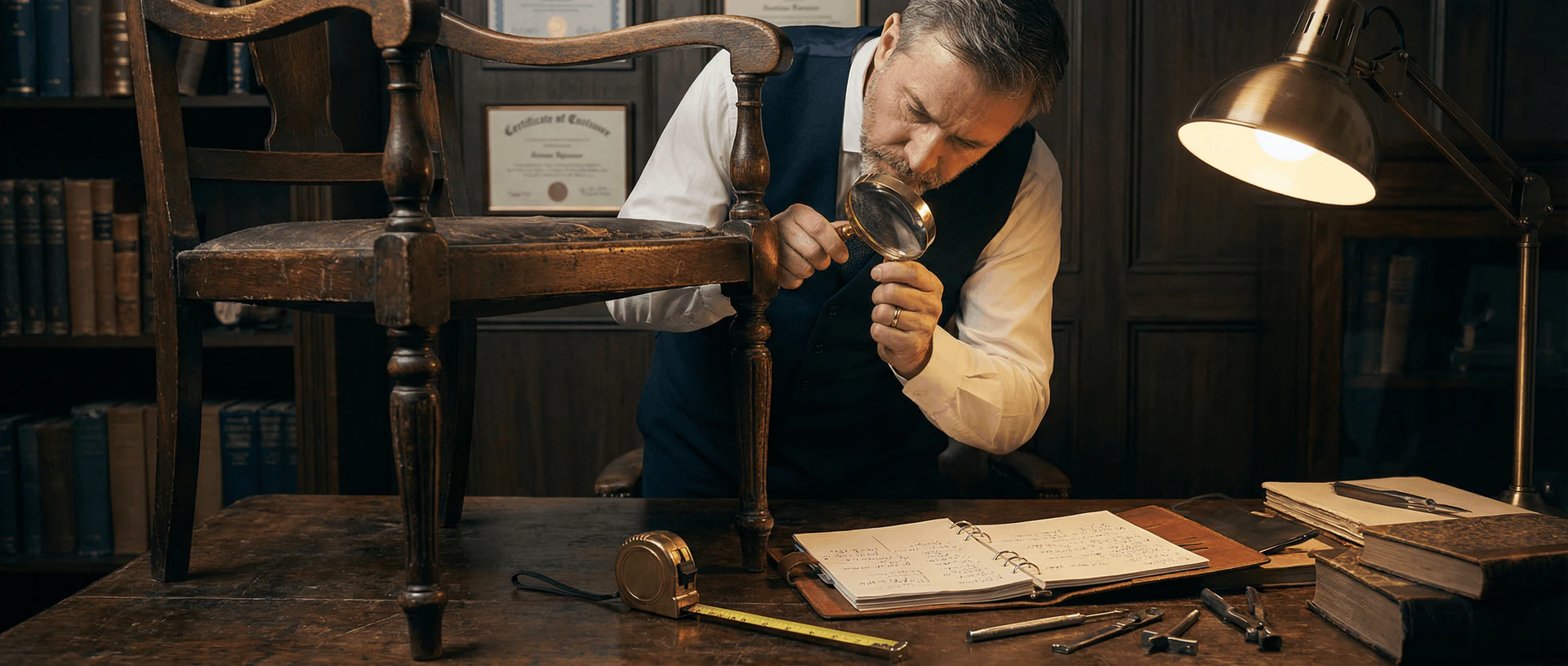
Professional furniture appraisers use systematic methods to determine antique furniture values, combining examination techniques, market research, and expertise. Understanding how experts value furniture helps collectors, dealers, and owners make informed decisions about purchases, sales, insurance, and estate planning. This comprehensive guide reveals the insider techniques professional appraisers use, explaining their systematic approach and valuation methods.
The Professional Appraisal Process
Professional furniture appraisal follows a systematic process that combines physical examination, research, and market analysis. Appraisers don't rely on intuition—they use standardized methods and multiple data sources to determine values accurately. Understanding this process helps explain why professional appraisals differ from casual estimates.
Professional appraisers use a three-step process: examination (physical inspection and authentication), research (comparable sales and market data), and analysis (synthesizing information into value conclusions). Each step requires expertise and access to specialized resources that casual evaluators lack.
Professional appraisals provide documented valuations for insurance, estate planning, legal matters, and sales. Unlike casual estimates, professional appraisals include detailed reports explaining valuation methods, comparable sales, and market analysis. This documentation provides legal standing and buyer confidence.
Physical Examination: The Foundation
Physical examination is the first step in professional appraisal. Appraisers examine furniture systematically, documenting condition, construction, materials, and authenticity:
Condition Assessment
Appraisers assess condition using standardized grading systems: Mint, Excellent, Very Good, Good, Fair, and Poor. Each grade affects value differently—mint condition may command 100% of potential value, while poor condition may be worth only 20-30%. Condition assessment includes documenting all damage, repairs, and wear patterns.
Construction Analysis
Appraisers examine construction methods to authenticate pieces and determine age. Hand-crafted joinery, tool marks, and construction techniques reveal age and authenticity. Machine-made characteristics indicate later production. Construction analysis helps date pieces and identify reproductions.
Material Identification
Appraisers identify primary and secondary woods, checking if materials are period-appropriate. Inappropriate materials suggest reproductions or modifications. Material identification helps authenticate pieces and understand their historical context.
Authenticity Verification
Appraisers verify authenticity by examining multiple factors: construction methods, materials, hardware, style characteristics, and maker's marks. No single factor determines authenticity—appraisers examine all elements together. Authenticity verification is crucial for accurate valuation.
Professional appraisers spend an average of 2-4 hours examining a single piece of furniture, documenting dozens of details including construction methods, materials, condition issues, hardware styles, and stylistic characteristics. This thorough examination provides the foundation for accurate valuation.
📺 Watch Videos: Professional Furniture Appraisal Process
Market Research: Comparable Sales Analysis
Professional appraisers research comparable sales to determine market values. Comparable sales—similar items sold recently—provide the most reliable value indicators:
Finding Comparables
Appraisers search auction databases, dealer listings, and sales records for similar items. Comparables must match key characteristics: period, style, maker, condition, and size. Finding good comparables requires access to specialized databases and market knowledge.
Adjusting for Differences
Comparables rarely match exactly—appraisers adjust for differences in condition, size, provenance, and market timing. Condition adjustments are most common—items in better condition command higher prices. Size adjustments account for scale differences. Provenance adjustments reflect historical significance.
Market Timing
Market timing affects values significantly. Appraisers consider when comparables sold—recent sales reflect current market conditions better than older sales. Market trends influence values—rising markets increase values, while declining markets decrease them.
Geographic Factors
Geographic location affects values. Items may sell for more in major metropolitan areas than in rural regions. International markets may value items differently than local markets. Appraisers consider where items will be sold when determining values.
Value Determination Methods
Professional appraisers use multiple valuation methods, depending on appraisal purpose:
Fair Market Value
Fair market value represents what a willing buyer would pay a willing seller in an open market. This is the most common valuation method for insurance and estate planning. Fair market value reflects current market conditions and buyer-seller dynamics.
Replacement Value
Replacement value represents what it would cost to replace an item with a similar one. This method is used for insurance purposes. Replacement value may be higher than fair market value because finding exact replacements can be difficult and expensive.
Liquidation Value
Liquidation value represents what an item would sell for in a forced sale situation. This method is used for estate planning and business valuations. Liquidation value is typically lower than fair market value because forced sales don't allow time for optimal marketing.
Insurance Value
Insurance value represents replacement cost for insurance purposes. This method accounts for the cost of finding and purchasing similar items. Insurance value may include dealer markups and acquisition costs.
📺 Watch Videos: Market Research for Furniture Valuation
Expert Techniques: What Sets Professionals Apart
Professional appraisers use techniques that distinguish their valuations from casual estimates:
Systematic Documentation
Professional appraisers document everything systematically: condition issues, construction details, materials, hardware, and stylistic characteristics. This documentation provides evidence for valuation conclusions and creates records for future reference.
Multiple Data Sources
Professional appraisers use multiple data sources: auction databases, dealer networks, price guides, and market reports. No single source provides complete accuracy—combining multiple sources yields the most reliable valuations.
Market Knowledge
Professional appraisers maintain current market knowledge through ongoing research, auction attendance, and dealer relationships. Market knowledge helps appraisers understand trends, identify comparables, and adjust for market conditions.
Specialized Expertise
Professional appraisers develop specialized expertise in specific categories, periods, or makers. This expertise enables accurate authentication, dating, and valuation. Specialized knowledge distinguishes professional appraisals from general estimates.
Common Valuation Mistakes
Understanding common mistakes helps explain why professional appraisals differ from casual estimates:
Overvaluing Based on Age
Age alone doesn't guarantee value. Many old items are common, damaged, or out of style, making them less valuable. Professional appraisers consider condition, rarity, and demand, not just age.
Ignoring Condition
Condition significantly affects value, but casual evaluators often ignore condition issues. Professional appraisers document all condition problems and adjust values accordingly. Poor condition can reduce value by 50% or more.
Using Outdated Comparables
Using outdated comparables leads to inaccurate valuations. Markets change, trends shift, and values fluctuate. Professional appraisers use recent comparables that reflect current market conditions.
Failing to Adjust for Differences
Comparables rarely match exactly, but casual evaluators often use comparables without adjusting for differences. Professional appraisers adjust for condition, size, provenance, and market timing to determine accurate values.
When to Consult Professional Appraisers
Professional appraisals are recommended in several situations:
- High-value items: Items worth over $5,000 typically require professional appraisal for accurate valuation.
- Insurance purposes: Most insurers require professional appraisals for valuable items.
- Estate planning: Professional appraisals help with estate planning and tax considerations.
- Legal matters: Court cases, divorces, or disputes require certified appraisals with legal standing.
- Sales preparation: Professional appraisals help set realistic asking prices and negotiate sales.
Understanding Appraisal Reports
Professional appraisal reports include detailed documentation:
Item Description
Reports include detailed item descriptions: dimensions, materials, construction methods, condition, and stylistic characteristics. This description provides complete documentation of the item.
Authentication
Reports document authentication conclusions: period identification, maker attribution (when possible), and authenticity verification. Authentication provides credibility for valuation conclusions.
Comparable Sales
Reports include comparable sales analysis: similar items sold recently, adjustments for differences, and market analysis. Comparable sales provide evidence for valuation conclusions.
Value Conclusion
Reports conclude with value determination: specific dollar amounts, value ranges, and explanation of valuation methods. Value conclusions provide clear guidance for insurance, estate planning, or sales.
Conclusion: Understanding Expert Valuation
Professional furniture appraisal combines systematic examination, thorough research, and expert analysis to determine accurate values. Understanding how experts value furniture helps collectors, dealers, and owners make informed decisions about purchases, sales, insurance, and estate planning.
Professional appraisals provide documented valuations with legal standing and buyer confidence. Unlike casual estimates, professional appraisals include detailed reports explaining valuation methods, comparable sales, and market analysis. This documentation is valuable for insurance, estate planning, legal matters, and sales.
When you need accurate valuations, especially for high-value items or legal purposes, consult professional appraisers who combine examination with research and expertise. Professional appraisals provide the documentation and credibility needed for important decisions.
📺 Watch Videos: Expert Furniture Valuation Techniques
Ready to Understand Expert Valuation?
Understanding how experts value antique furniture can feel overwhelming—what methods do they use? How do they determine values? The truth is, professional furniture appraisal combines systematic examination, thorough research, and expert analysis to determine accurate values.
An item's value depends on many factors: condition provides the foundation, rarity creates scarcity, market demand reflects buyer interest, and provenance adds historical significance. Professional appraisers examine all factors together, using multiple data sources and specialized expertise to determine accurate values. The most reliable valuations come from combining physical examination with market research and expert analysis.
Feeling overwhelmed by valuation or need quick estimates? Antica AI is like having an antique expert in your pocket. Just snap a photo to get instant identification, value estimates, and market context—turning your valuation questions into confident answers.
Download Antica AI